Published in the Herald-Zeitung, March 10, 2026
We have had so little rain in the last few years that I went to Google to get a snapshot of lakes and rivers south of San Antonio. What I learned was alarming. In addition, we have seen little coverage of this crisis that worsens with each day.
I learned that San Antonio has received 1.46 inches of rain since January 1, “which equates to just 40% of the city’s normal amount of rainfall to date, and is the driest start to a year since 2014.”
Closer to New Braunfels, “last year, Canyon Lake water levels hit an all-time low on May 26, falling to just 45.1% of its capacity. The survey article offered “another way to look at it: Since January 1, Canyon Lake is losing an average of 106-acre feet of water per day, which equates to just over 34 million gallons of water lost daily.
Medina Lake, not far from us, “continues to be a shadow of its former self. The lake was last at full capacity in July 2019, and it has sat below 10% for more than three years, since August 2022.”
Another source I consulted is quite amazing. While searching for a book in my study recently, I found stuck to another text a copy of “Harper’s Magazine,“ which I’ve subscribed to for decades. Writer Jacques Leslie wrote a lengthy article, “Running Dry: What happens when the world no longer has enough freshwater?” For me, the kicker was the date of the issue: July 2000. Over a quarter of a century ago!
In part, the article is a scathing indictment of the damage dams do the environment: “Bureaucrats like dams because that’s where the action is: the expense of dams ensures power to its overseers.” (p.44).
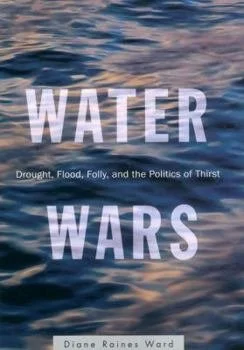
The third source, one I tripped across in the bookshelves of another room in our home, was a magnificent find. Written by Diane Raines Ward (sorry, but I love her middle name) is entitled “Water Wars: Drought, Flood, Folly, and the Politics of Thirst” (2002).
The dustjacket’s observations strike the central theme of this book (280 pp). “The story of water is fascinating, complex, with roots as deep as civilization. Despite its profound, life-giving role in our planet’s history, what we hear about today is mostly bad news. We are reminded often of another drought (my sources), or alarming statistics about pollution, population growth, and climate changes, which together threaten to create, even more than oil, the cause of war within our lifetime.”
One quickly understands through these details something we continually intensify our alienation from as a species: the interconnectedness of all parts of a rich, organic and woven fabric that interlaces into all other fragments; so to create stress, chaos, or indifference to any one part, infects all others. Contagion, then, skips right past conservation.
To continue with wasteful habits of overuse, misuse, and distorting the idea that there will always be enough water, touches on immorality through abuse. Many feel that we have already passed the moment when the effects of climate change can be reversed, however long that process may be and whatever cost we face.
But that is a meager excuse for not doing anything to preserve what can be salvaged. That is my hope.