Published in the Herald-Zeitung February 17, 2026
The word “moral” can be taken in several ways. I like to think of “morality” as a set of principles that guide an individual and a people towards constructive laws and actions that shepherds them towards what is good, benevolent and advances encouragement for the benefit of all. Such moral propensities are inclusive.
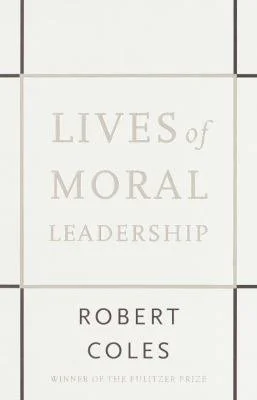
Some time ago I came upon a book by professor of psychiatry and medical humanities at the Harvard Medical School. Robert Coles’s “The Lives of Moral Leadership” (2000). is a memoir of sorts, both anecdotal and narrative in design. In it he remembers, as I am doing now, writers who have influenced him as well as the literary works that informed and assisted him in committing to social change.
Some of the many names he lists include Dorothy Day, Dietrich Bonhoeffer, Gandhi, Joseph Conrad, Shakespeare, Dostoevsky, Martin Luther King, Walker Percy and Flannery O’Connor. The complete list is more extensive.
However, often the most uplifting stories of moral leadership come from the lives of common folk who rose to a situation that they felt was wrong and exhibited what can only be called “greatness” in their response to it. He included Andrew Thomas, a black southern man who dared to demonstrate for the right to vote, and Ruby Bridges, who integrated a white school in 1960.
Coles wrote that she was an extraordinary young woman “whose courage is mobilized to ward off mobilized hate.” These courageous examples reveal that none of us can foretell who among us has a morality thermometer; when it reaches an intolerable level, one senses a moral duty to lead or to encourage another to flash their own badge in the name of integrity and moral verity.
I sense that we each must ask ourselves when it is time to push back, to speak a truth that has been effaced and downgraded to the categories of irrelevant and false.
Careers that one wishes to pursue originate from one segment of our lives; callings, however, arise from a deeper place in our being. With so many families suffering economic and social hardships today, there are those whose duty to lead their children, even their spouse, into the unknown territory of adversity, threats, and demands are countered by fears to remain silent.
When it derives from fearing our national leadership, who perpetuate half-truths or simply lies to preserve power and control, the chance of getting in trouble may increase. No easy answer here. But Coles asks a big question: “How does a moral purpose, belief or conviction get applied to the world in a practical way?”
The author helps us all on the way by citing his novelist and friend, Walker Percy’s novel, “The Moviegoer.” He refers to “how we hand one another along morally” or “the moral connected-ness that matters so much in our minds and hearts.”
I also trust the voices of poets who are among the most effective displayers of the individual’s and the collective’s moral life. Cole suggests that “literature can be a living presence for many people.”
I wish it was taught, at least in part, in public and private schools “as a living presence,” instead of as an intellectual sleuthing after symbols and foreshadowing!
Finally, the moral leader leans into the wind of public opinion, throws off the cloak of being satisfied with the status quo, and strikes out, most often alone, sometimes picking up kindred souls by example. Martin Luther King, always anguished by his own work, insisted that we must find our way toward family members and friends but also toward strangers. That was the moral call of Jesus.