Published in the Herald-Zeitung, April 9, 2026
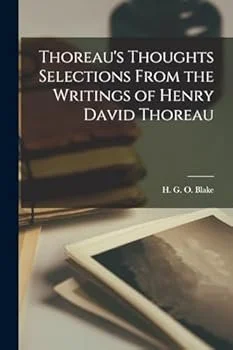
Some weeks ago, my copy of The Thoughts of Thoreau containing excerpts from many of his journals and letters, simply disappeared. I had given up finding it until a few days ago, when I was looking for another book adjacent to his collection. Lesson: stop looking for what you lost and it will appear.
The op-ed pages of the Herald-Zeitung contain so many rich articles on a vast array of topics, but I don’t remember reading about the medium we use to convey our opinions and beliefs: writing itself.
Henry David Thoreau is one of our national treasures, in no small way because of how he holds a mirror up to us to reveal our interior lives. Born July 12, 1817 at Concord, Massachusetts, he died there on May 6, 1862. Between those dates he offered us many rich insights on human character.
I was delighted to find in this volume a section, “On the Art of Writing” and dove right in. His reflections on this art form he wrote out in cursive. His interests in writing in various formats include letters, notes, and half-thought insights. At one point he complains that “letter writing too often degenerates into a communicating of facts, and not truths.”
He grows exasperated (which is often!) with those who “advise you to print! How few who advise you to lead a more interior life. In the one case there is all the world to advise you, in the other there is none to advise you but yourself.”
The question then arises: when was the last time you received in the mail a card or letter in cursive? Or as the saying goes, “written by hand”! We might even gather them in a box used exclusively to store these letters. I have done so several times.
On occasion I will find a letter I used as a bookmark, put the book back on the shelf and soon forget about it. I may discover it months or years later—what a forgotten treasure laced into its remembrances!
Thoreau can often be playful, as in the following: “It is vain to try to write unless you feel strong in the knees.” His teasing metaphor makes a point here that literal description or explanation would simply fail at conveying.
One following on the above is more instructional: “Write while the heat is in you. When the farmer burns a hole in his yoke, he carries the hot iron quickly from the fire to the wood, for every moment it is less effectual to penetrate it. It must be used instantly, or it is useless.” I wonder if this is the origin of the wisdom: “Strike while the iron is hot!? I do not doubt that many of our colloquial sayings of today originated in Thoreau’s imagination.
In a slice of tongue-in-cheek humor, he comforts himself with the following: “It is enough if I have pleased myself with writing. I am then sure of an audience,” even if it is only an audience of the writer himself.
In a more sober mood, he declares: “Improve every opportunity to express yourself in writing, as if it were your last.” I hear him instructing us to be more expedient in our writing, not to fall unconscious when we compose, but to be aware, attentive and yes, even grateful for being given another chance to get it write!
Finally, I like the implications of the following: “It is fatal to the writer to be too much possessed by his thought. Things must lie a little remote to be described.” I hear him whispering: don’t cling too tightly to your thoughts; step back from them. Like now!