Published in the Herald-Zeitung on January 16, 2026
Now that we are at the end of the gift-giving season, I am reflecting on just what it means to give and to receive gifts. It might be good to reflect on the gifts we gave to others during the holidays, and the gifts we received. Not just the act of exchanging gifts, more of what the gifts themselves mean.
If we look at gifts from another angle: we are all gifted in our own way. Over time we may because of our own gifts be more willing to share them with others. A gift created by you for others has more intimate, creative energy than something store-bought; yet they too have their place.
We use or hear the phrase, “never look a gift horse in the mouth.” It suggests being grateful for a gift, no matter how small. We realize that a gift is shared freely, with affection. It makes me wonder what gifts I have not shared with others. Are there new ways to use my gifts to benefit others?
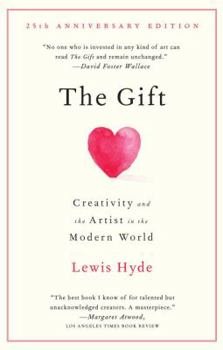
Years ago, I bought a book on a friend’s recommendation. Lewis Hyde’s The Gift: Imagination and the Erotic Life of Property. At well over 300 pages, it is a massive and deep exploration of the powers and paradoxes of gifts.
In a footnote, which is often more interesting than the main text, Hyde cites a French entomologist: “There is a.. . . medical usage in which [the Greek word] dosis denotes the act of giving, whence develops the sense of the amount of medicine given, a ‘dose.” Gifts may be given or received in the right dose, what dose we may need in specific circumstances.
Many have heard of individuals who have been prescribed an “overdose” of a medicine—physical, psychological, spiritual—to their detriment. When we are encouraged by circumstances to give an individual “a dose of his own medicine,” that can be seen as a gift of sorts because having a gift fall back on itself in this manner, may in fact transform the one in need of change.
Gifts have a powerful spiritual dimension attached to them. Hyde suggests that “when art acts as an agent of transformation, that we may correctly speak of it as a gift. In healthy cultures, as Hyde writes, “it will have spiritual teachings available at all levels of maturation and for the birth of the spiritual self.”
Some paradox is at work in what he adds: “Between the time a gift comes to us and the time we pass it along, we suffer gratitude.” The result to complete the ritual of gift-giving is that “a gift is not fully realized until it is given away.” Some inner vitality is awakened “when we give away what has been received.” Life itself, the author believes, is gift-giving, taking care of the other.” We may also, in caring for others, give a gift of ourselves to ourselves.
In other words, a paradox of gifts is that they grow in value and transformation when given away to the recipient, which may in fact be us. Paradox opens us to mystery, which Hyde tracks. “The Greek word for mystery—muein--means to close the mouth; thus, what is learned cannot be said.”
This short exploration has taught me that at times a gift can be shared by allowing for silence. We might ask ourselves what gifts we have not yet shared or revealed to others. Enough said.