Originally Published in the Herald-Zeitung, November 29-30, 2025
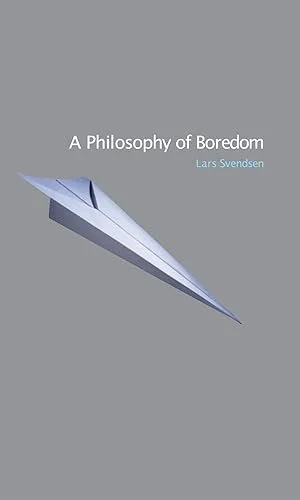
Generally speaking, it is not difficult for us to know when we feel the energy of joy, anger, anxiety, contentment, even happiness. But more recently, and from wherever it originated, I found a lengthy study entitled A Philosophy of Boredom by Lars Svendson, who wrote it in Norwegian in 1970 when he was 30. First published in 1999, it was translated into English in 2005.
Intrigued by the subject matter, I began reading it; at just under 200 pages, it has yet to bore me. Part of his questioning of this state or condition of mind and body was to ask: “What is boredom? How do we know when and if we feel it? We often recognize, for example, when we are frustrated or stuck in our lives, but boredom seems from his research less easily identifiable. Boredom’s presence can be a rather knotty problem.
Has boredom always been with us throughout history? Perhaps. I have learned to trust my responses to what I am reading, watching, hearing or thinking. I can’t be sure if what I experience at times can accurately be called “being bored.” I asked myself: What is it to be bored? Can I be bored and not know it? Can boredom saturate one’s life to such an extent that one is constantly in an emotional stew of boredom? What responses would you give to the above questions?
I also wonder if boredom can be a way each of us can be victimized by those forces that promise us—through a product or through persuasion—that they can liberate us from boredom?
If viewed from another lens, what feels like a constant increase in our cultural and political violence be a desperate and perhaps futile attempt to enliven one’s life with meaning and purpose? Or to escape the terrible inertia of violence that both distracts one as well as destroys one’s quality of life?
Svendson at one point suggests that “boredom and depression overlap.” Ok, but where does each of us draw the line in this overlap? Am I feeling bored or depressed? It seems to me important at least to entertain where that demarcation resides.
Even more interesting: Svendson cites several writers who believe that boredom “contributes to a great deal of evil.” Not unrelated, the author locates moments historical moments where the outbreak of some wars were heralded “by manifest joy, with euphoric crowds filling the streets, as if celebrating the fact that something has finally broken the monotony of everyday life.”
Yet, on a day-to-day level, so many of us, and I count myself in this category—where one is not immune in moments of life, when we are easily distracted because the present moment is not reflected upon and appreciated in its ordinary mystery. Can we become bored by not caring for the deeper strata of our lives, one in which spirit and soul need attention and cultivation. Is feeling bored a calling, a vocation to return to the quality of our lives, not their quantity?
We may also succumb, as Svendson believes, that “boredom normally arises when we cannot do what we want to do or have to do something we don’t want to do. But what if we have no idea what we want to do? When we have lost the capacity to get our bearings in life?
We all live in a world packed to the rafters with distractions, of competing ideologies, beliefs, trends, fashions and fabrications demanding our attention. These alone are enough to bore us to death!