AI’s Birth of a New Story
As AI grows, accelerates, and offers us ease in so many areas of our lives, it is simultaneously creating a new story; one that I have read is changing the way we understand our own lives, their purpose, and even their meaning.
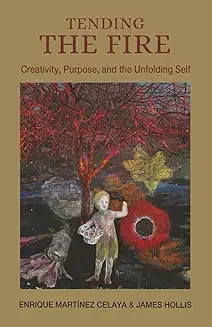
As Enrique Maertinez Celaya, a former physicist and now an internationally renowned painter puts it: “The accelerating presence of artificial intelligence will inevitably disrupt our long-standing frameworks for purpose, not just in how we work, but in how we define ourselves within a world where human contribution is no longer required in many of the ways we once took for granted” Tending the Fire, p. 236).
We all recognize how much our work life structures so much of the way we live each day, how we enjoy those “days off,” like the weekends or holidays. We can refresh ourselves during these hiatuses and return to work renewed. But what world do we imagine if that structure that shapes us is eliminated?
He continues: “As artificial intelligence transforms not only our tasks, but our sense of being needed, the ability to find purpose beyond utility may become one of the defining struggles of this era” (p.237). We have become painfully aware of the difficulties our young citizens face in locating a job that has both meaning for them as well as a salary to live on comfortably.
Most of us, Celaya affirms, “tend to associate purpose with certainty, but purpose is less about certainty and more about immersing in the flow of life’s complexity and embracing the tension between the known and the unknown, the inner and outer, the self and the greater whole” (p. 237). I find his questions tough; they do not allow a bumper sticker response. They descend deeper than what is easily explained or acknowledged. But I sense we might do well to think about where they take us, for the future of AI is now.
I wonder if it is any accident that many universities and colleges around the country have noticed an upsurge of students majoring in philosophy? Philosophy is as much an attitude as it is a field of inquiry. I suggest this because of Celaya’s observation: “Purpose. . . is less about reaching an endpoint or a certain status and more about the relationships we build, the values we hold, and the ways we live in alignment with what matters to us; purpose gathers us into a life that feels coherent, full and true” (p.238).
To pivot for a moment here at the end, I share one observation cited from David. R. Loy’s The World is Made of Stories; there he writes, quoting Englishman, William Hazlitt, “Man is a make-believe-animal—he is never as truly himself as when he is acting a part” p.34).
In the face of AI, we might reflect on what part we am willing to play which best expresses who we are becoming, rather than have it chosen for us.