
An Attitude of Gratitude

Finding a medicine to arrest the Corona Virus in the body of those who test positive for it as well as a vaccine that will prevent it are both indispensable, and time is most important: the sooner the better.
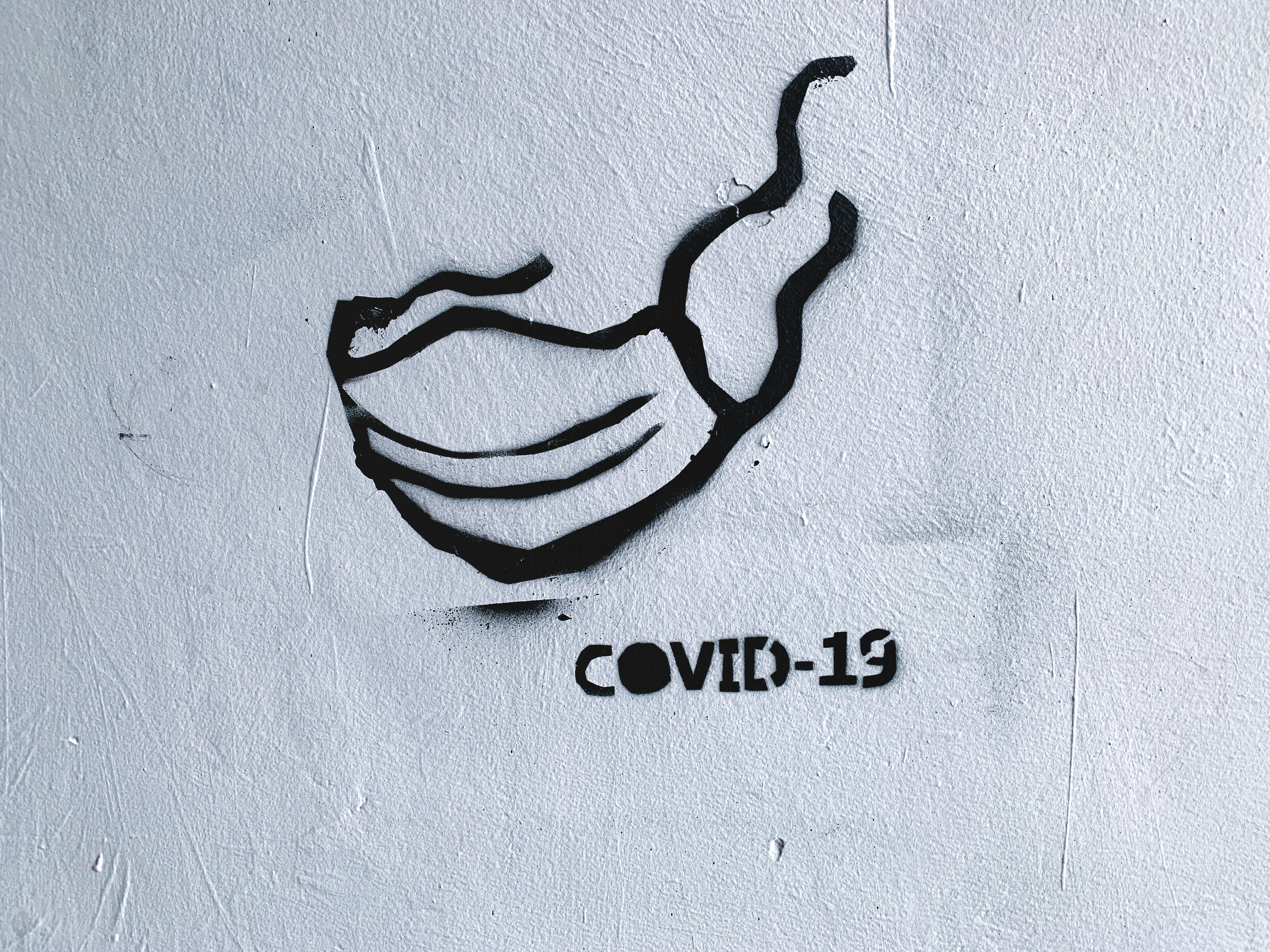
In the meantime, something else strikes me as important in this global challenge—the attitude we each take up in our daily lives, which has to do with how we think about and respond to the virus’s threat. The Swiss psychiatrist and cultural mythologist, C.G. Jung (1875-1961), whose writings stretch across 20 volumes, offered an extensive description of the power and importance of the attitudes we carry into any daily situation, whatever its level of complexity and force.

Jung suggests that on its most basic level, an attitude is “a state of readiness.” The attitude we bring to any life situation will shape how we think about it, imagine it and respond to it. Attitudes are as important to our way of being as is our breathing.

As the virus unfolds globally and in our own nation, we hear or read of individuals or groups who live “as if” there is no virus or no systemic threat to them, even as it continues to kill thousands and incapacitate thousands of others. My estimates here may be woefully low.

Jung advises that we cannot perceive either the outer world or the inner world without a guiding attitude to help us navigate both terrains. I am learning that an attitude contours what we each select to claim as relevant and what we are inclined to leave along the side of the road as irrelevant, untrue, unimportant or simply non-existent.

Our habitual attitudes tend to gravitate towards what is familiar, has proven to be security-promoting and meaning-making, such that when a significant new reality, especially something as violent as the cv, we might tend to force it into the habitual attitude that sustains us so to lessen its destructive nature. When a habitual attitude will not budge, then any new reality must be persuaded to fit into its mold.

Of course, another possible option is that the individual or the collective shifts its attitude in order to apprehend more of the new content’s reality. The startling discovery here is that the attitude(s) that we cultivate figure largely into what reality we are capable of absorbing. A shift in attitude is also nothing less than a transformation of consciousness. Such a conversion means that one’s manner of selecting  a certain set of perceptions that comprise what one has decided to be conscious of, what is most important to pay attention to, to reflect or meditate on determines what reality one lives, and perhaps dies, by.

Something as massive as the current virus can push us to the edge of our comfort zone, and perhaps in some cases, shove us forcefully into a new attitudinal zone of awareness. Some may find themselves breaking the mold of an old attitude which has outlived its reassuring qualities. I ask myself with each news cycle and readings on this mysterious and ubiquitous entity:

What is my own attitude towards the virus?

How am I responding to it?

What am I willing to give up to contribute to arresting its spread?

Can I sacrifice parts of my life in order to serve a greater good?

C.G. Jung observed that depending on our attitude we can be swallowed up by the way we think and respond to any life situation, or we can be liberated by a shift in attitude, especially one that guides us to further self-understanding.

One attitude is clear that I share with others: the deep gratitude for all public servants in many professions whose attitude of serving others, even while risking their own lives, is unconquerable.
The Pull of Curiosity

IMG_0824.jpg

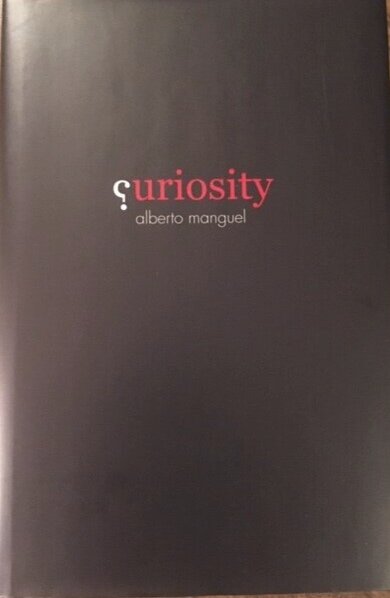
A book I had bought years ago, brought home, shelved and forgot about, whispered to me the other morning that it was ready to be read. I obliged. It is called simply Curiosity by Alberto Manguel. I purchased it for the obvious reason that I was curious about what curiosity is, beyond my own understanding.

The author, from Buenos Aires, tells early on of walking home from yet another new school as a youth. He was tired of the same way home so, diverted by the powers of curiosity from his well-grooved pattern, took a side street and soon became lost. He could only offer in retrospect that he did not know why he diverged from his familiar path that day except that “I wanted to experience something new, to follow whatever clues I might find to mysteries not yet apparent” and this led him on an adventure that was less frightening than it was energizing because it exacted a feeling of wonder in him.

He also learned at a young age how reading could provide him untold divergences from the familiar. He realized what many of us have discovered: that reading always seems to include the acts of remembering, revising and renewing what we may have thought was in our lives settled and fixed-in-place for the duration.

As I continue to read his stimulating adventure, I began to consider that curiosity’s constant companion is consciousness itself, a certain degree of intensity to even arouse my wonder about something. Becoming curious, wondering, asking why, who, what is perhaps one of the most valued human gifts we hold and can cultivate in ourselves. When I need a refresher course, I visit our younger son’s family and always strike up a conversation with their older daughter, Eleanor, age 7; she is a wonder-filled child who wants to know why about everything. Her imaginative life is at full throttle right now and her love of learning to read is a consequence of such abundance. She renews my awakening to be curious.

Not wealth but wonder seems to be a signal of true abundance; or, said another way, wonder is one of our delightful forms of wealth. In his Introduction Mangel believes “we imagine in order to exist, and we are curious in order to feed our imaginative desires.”

But then he moves to a discussion that intrigued me further: “Imagination as an essential creative activity, develops with practice, not through successes. . .but through failures. His reasoning may surprise some: “failures force us, if we are curious enough, to try again, to pursue a different tact that may lead to new failures.” My own failures have always pushed me to question what I had been assuming and to revisit what I wish to achieve with a bit more humility.

Our culture has as one of its bumper stickers: “Failure is not an option.” I wonder where this idea came from, an idea that is actually harmful and unrealistic. Of course, learning to fail better runs against this popular and misleading motto.  

Failing can actually free us from the fantasies that gather around success in order to imagine more deeply and, depending on the trajectory of our curiosity, lead to unforeseen surprises and new ways of knowing what once seemed so familiar and ordinary.

But to the other side, a question:  are there people, things, situations, conditions, or beliefs that we should not only not be curious about, but also not question? To leave these arenas at the doorstep of “It is what it is.”? Maybe. I think, however, that whatever exists we have a right to be curious about, to question;  the danger of not doing so can lull us into  accepting what, finally, attests to be untrue.

It may be better to fail in our curiosity than to yield to what lacks sufficient veracity.

Review of Patrick Mahaffey's Integrative Spirituality

We might say, then, that the term ‘religion’ designates the attitude peculiar to a consciousness which has been changed by experience of the numinosum.”
—C.G. Jung, Psychology and Religion: West and East (1958/1977, CW 11, p. 8)

Integrative Spirituality Mahaffey book cover.jpg

Review of Patrick J. Mahaffey’s Integrative Spirituality: Religious Pluralism, Individuation, and Awakening, London, Routledge, 2019.

I am pleased to write this brief review of such a fine study by Patrick Mahaffey, co-chair of the Mythological Studies Program at Pacifica Graduate Institute in Carpinteria, California His thoughtful and well-written contemplative and scholarly text grows directly from his own religious history through which he grew curious about many spiritual traditions. The breadth and scope of his study is revealed in the titles of his chapters; here are just a few to give you a sense of the book’s content: “The Spirit of the Times” (chapter 1); “Religious Pluralism, Spirituality and Stages of Faith” (chapter 2); “Hinduism” (chapter 4); “Buddhism” (chapter 5); “Awakening and Psychological Development” (chapter 8).

But lest the reader begin to think that this text is only about ideas of religious pluralism, they will be delightfully surprised by chapter, 9, entitled “Credo,” which I admit at the outset is my favorite in the book. For here the author outlines how he practices, for instance, a form of contemplative yoga called “Shaiva theology.” This form of yoga is only one, however, of many integrative practices that, while taking varied forms, all congeal for the author into one intention: “to cultivate balance, integration, peace within, and harmonious relationships with others” (203).

But one or several forms of embodied meditation does not mean that one spiritual practice fits all contemplatives. The author makes it clear in this chapter that “Spirituality is a matter of direct experience, and is, therefore, inherently personal. Each of us, I have maintained, must find our own way” (203). I understand Mahaffey’s study as less a Handbook than a Guide into one’s own spiritual landscape that is at once spiritual, poetic, mythic, psychological and autobiographical. In reading this carefully crafted text, the reader may discover, by the powers of analogy, one’s own path. Resonance with, rather than rote rigidity, is the preferred method of pilgrimage here.

From my perspective, the cornerstones—the two most prominent paths—in Mahaffey’s study are awakening (spiritual) and individuation (psychological), although the demarcation between them is thin indeed. Both of these paths, as the author shows with great nuance, assist in developing in the individual qualities of compassion, curiosity and coherence in one’s life by cultivating caring for otherness, difference, and the radical distinctness of each person as well as the dignity of the planet’s multiple and rich life forms.

It may be clear already, but is worth noting at this juncture, who the audience is for such a multiple religious exploration underscored by Jungian depth psychology as well as several founders of an assortment of spiritual practices. My sense is that it speaks to those who, while enmeshed happily in any one tradition, sense or see the intrinsic value of conversing with a host of other traditions in order to broaden and deepen one’s own. I understand Integrative Spirituality to be in the tradition of another favorite book of mine by the Vietnamese monk, Thich Nhat Hanh: Living Buddha, Living Christ, which illustrates how two seemingly radically different traditions actually have much to say to one another within the fields of their respective beliefs that mutually enrich one another.

In that vein, Mahaffey’s introduction is one of the most important segments in the book; it is a crafted mosaic of disciplines emerging as part autobiography, part an expression of a developed sensibility after decades of practice,  contemplation and teaching. The quality of his integrative approach is witnessed especially in the way he continually integrates Jungian insights from the psychologist’s Collected Works as well his The Red Book to highlight Mahaffey’s artistic intertwining of several strands of spiritual and psychological insights into a coherent and persuasive whole. Underscoring the entire study is this declaration from the author: “My conviction is that real change comes from inner work, one person at a time, and cumulative changes in our inner world shape the conditions of our shared social reality. Therefore I have made the cultivation of interiority the primary focus of this book” (1).

I sense that Mahaffey is one of those souls who finds authentic joy in self-discovery and, by extension, discovery of the world, a joy that can be nurtured for a lifetime. He and his book are models of integrity and integration of profound wisdom gleaned and amplified from a host of sources. His rich bibliography contains over 150 sources, enough reading for a lifetime.